Survey Research
ICF offers comprehensive survey research services that empower clients to gain valuable and actionable insights on issues that matter.
For more than 40 years, we have demonstrated design, methodological, and statistical knowledge through the implementation of large and complex survey research projects. Our clients consist of United States federal, state, and local agencies, universities, nonprofits, and commercial organizations.
Our survey research services include:
- Designing samples, data collection protocols, and instruments
- Conducting surveys through a variety of data collection methods
- Analyzing, reporting, and presenting findings
- Protecting all processes and data through quality assurance and system security
Our statisticians, survey methodologists, project managers, survey analysts, subject matter experts, and consultants work side-by-side to collect the best possible data and increase each client’s ability to act on survey results. The statistical and methodological experience of our survey research staff is complemented by the depth and breadth of the subject matter knowledge within ICF, ranging from health, education, and social programs to energy, environment, and transportation.
ICF survey research teams offer expertise across all data collection modes, such as telephone, mail, web, in-person, and mixed-mode designs. We have a centralized operations center with 500 CATI (computer-assisted telephone interviewing) stations, along with additional satellite centers and distributed interviewers.
Our data collection personnel are trained to work with difficult-to-reach, multilingual populations and sensitive topics. As a baseline, ICF offers stringent data and system security and we can make further accommodations up to the highest federal security standards—as high as the National Institute of Standards and Technology (NIST).
ICF is committed to producing the highest quality survey research work with integrity and compliance and is certified to ISO 20252:2020 by CIRQ, an International Standards Organization and subsidiary of the Insights Association. The ISO 20252 Standard for Market, Opinion, and Social Research certification establishes globally recognized terms, definitions, and service requirements for project management in research organizations. By following the processes outlined in ISO 20252, we ensure our research methods are transparent, consistent, and well-documented.
Methodologies
ICF understands our clients’ missions. We know that improving health outcomes depends on accurate, defensible answers to research questions. Whether tracking risky behaviors in teens or generating estimates of disease outbreaks, we apply objective quantitative skills with acute awareness that survey outcomes will affect people’s lives.
Our teams of research methodologists have more than 20 years of experience in design, data collection, analysis, and reporting. They use this base of knowledge and each project’s unique qualities to determine which methodologies will maximize data quality, response rates, and accuracy.
We are experienced in systematically applying a variety of data collection modes in multisite studies across the U.S. ICF helps clients strike the balance between systematic performance and nuanced execution that results in maintaining consistency, relevance, and quality of data and analysis throughout the process.
ICF is committed to producing the highest quality survey research work with integrity and compliance and has been certified by the CASRO Institute for Research Quality (CIRQ) for ISO 20252 certification.
Instrument Development
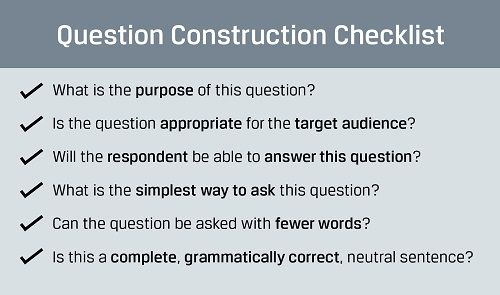
Well-designed survey instruments underpin any successful research project. ICF works closely with each client to develop respondent-friendly instruments that encourage accurate responses. We know how to reduce cognitive stress by offering instructions when needed and creating logical navigation. And we never let a questionnaire go live without thorough testing and piloting.
Always mindful of the client’s overarching research goals, our instrument design experts construct simple, clear, and purposeful questions. We can translate into multiple languages and design for a consistent experience across modes.
As survey research evolves, ICF can apply its decades of experience to ensure that the fundamentals are not lost. For sensitive topics like health and personal behavior, a mode-agnostic approach is especially important for improving response rates and data quality, offering respondents the freedom to answer in the format most comfortable for them.
ICF is committed to producing the highest quality survey research work with integrity and compliance and has been certified by the CASRO Institute for Research Quality (CIRQ) for ISO 20252 certification.
Experts:
- Larry Luskin
- Heather Driscoll
- Kate Flint
- Arlen Rosenthal
Data Collection & Management
Improved response rates and reduced total error are the overriding goals of survey design. As survey research evolves, achieving those goals means proactively adjusting data collection techniques and tools. Game changers like wireless technology can’t be ignored. Today’s respondents must be able to complete surveys from any location, on any day, at any time. They may begin a survey from a public location or on a cell phone and finish it at home on the web.
ICF’s survey and data collection professionals provide objectivity and a deep understanding of health-focused programs and best practices. For more than 30 years, we have conducted health-focused surveys with a combination of sampling techniques, mixed-mode and technology-enhanced research methodologies, and local-language interviewing.
Our end-to-end survey and data collection capabilities include:
- Telephone interviewing with computer-aided quality control and rapid data compilation.
- Face-to-face interviewing via computer to contact hard-to-reach populations, monitor data collection activities, and facilitate communication
- Self-interviewing to enable survey participants to enter data electronically without interviewer assistance when appropriate
- Cell phone research, including electronic incentives and text messaging, to make cell phone interviewing successful
- Data coordination to choose protocols, establish procedures, maintain quality control, and produce standardized data sets for analysis
ICF partners with clients to maintain strict security and adhere to all relevant privacy legislation. Our institutional review board and knowledge of U.S. government clearance processes help to facilitate rapid and effective health program outcomes.
We are committed to producing the highest quality survey research work with integrity and compliance and have been certified by the CASRO Institute for Research Quality (CIRQ) for ISO 20252 certification.
Data Visualization & Reporting
Improved health outcomes are grounded in successful visual representation of data. The ability to see information from many angles and levels of detail enables comparisons and illuminates trends.
Following data collection and analysis, ICF creates customized platforms and portals that allow clients to interact with data and reports in a secure environment. Reports are professional, grounded, and defensible—reflecting a level of quality required for corporate and government executives.
ICF stands out for our ability to form multi-disciplinary teams of subject matter experts and data scientists who work closely with creative and project management staff to produce high-quality deliverables. Whether an interim online status report or a polished full‐color report presented to constituents, we can produce the report that best suits a client's needs.
ICF reports for the Internal Revenue Service (IRS), the U.S. Department of Housing and Urban Development (HUD), and the National Oceanic and Atmospheric Administration (NOAA) are submitted routinely to Congress. In addition to standard reporting, ICF continually develops high-end, innovative capabilities—GIS mapping, data visualization, and harmonization—to offer clients actionable insights to make data-driven and informed decisions.
We are committed to producing the highest quality survey research work with integrity and compliance and have been certified by the CASRO Institute for Research Quality (CIRQ) for ISO 20252 certification.
Sampling & Design
Survey research is much more than collecting data. Surveys that produce high quality results are designed and tested by experts like ICF’s survey teams, which include top-level statisticians, methodologists, analysts, and consultants with decades of hands-on experience.
ICF’s teams combine the best of theory and practice to address health challenges on a local, national, or global scale. Our design approach maximizes survey response rates and minimizes coverage, selection, and measurement errors, increasing your confidence in our results.
Actionable and fit-for-purpose design includes strategic consultation on probability vs. non-probability methodologies and development of survey instruments that are easy-to-use and tested for accuracy. Data collection planning considers multiple modes, applied individually or as hybrid solutions that integrate in-person, mail, telephone, web, and mobile devices, as necessary.
We draw on our significant experience targeting hard-to-reach populations for sampling designs that meet clients’ goals for representativeness, efficiency, and cost. Our experts can:
- Design, construct and verify sampling frames
- Select valid samples, including Random Digit Dial samples or combined cell phone and landline samples
- Compute sampling weights and prepare analytic datasets
- Clean data, deriving computed variables, and coding domain variables
Accurate assessment is the foundation for addressing health-related challenges. For populations in the military, education, and communities around the world, ICF is designing research that gives clients the answers they need to improve lives.
ICF is committed to producing the highest quality survey research work with integrity and compliance and has been certified by the CASRO Institute for Research Quality (CIRQ) for ISO 20252 certification.
Statistics & Data Analysis
With more than 200 statisticians and analysts on staff, ICF can analyze survey data using the most appropriate statistical techniques for each client’s needs, without favoritism or bias toward a specific tool.
ICF analysts have experience with all industry-standard statistical software as well as boutique packages. Our statistical methods include but are not limited to segmentation, structural equation modeling, factor analysis, and cluster analysis. In addition, ICF experts use the Total Survey Error (TSE) model to design and analyze survey data, addressing coverage error through good sampling frame development, nonresponse bias using nonresponse adjustment procedures, and measurement error by developing questionnaires using tested questionnaire design principles.
ICF is internationally recognized for work on the U.S. Agency for International Development (USAID)-funded Demographic and Health Survey (DHS) Program. We conduct nationally representative studies in developing countries, which are then presented through reports, a user-driven interactive portal, and geographic information systems (GIS) maps.
Related industries and services